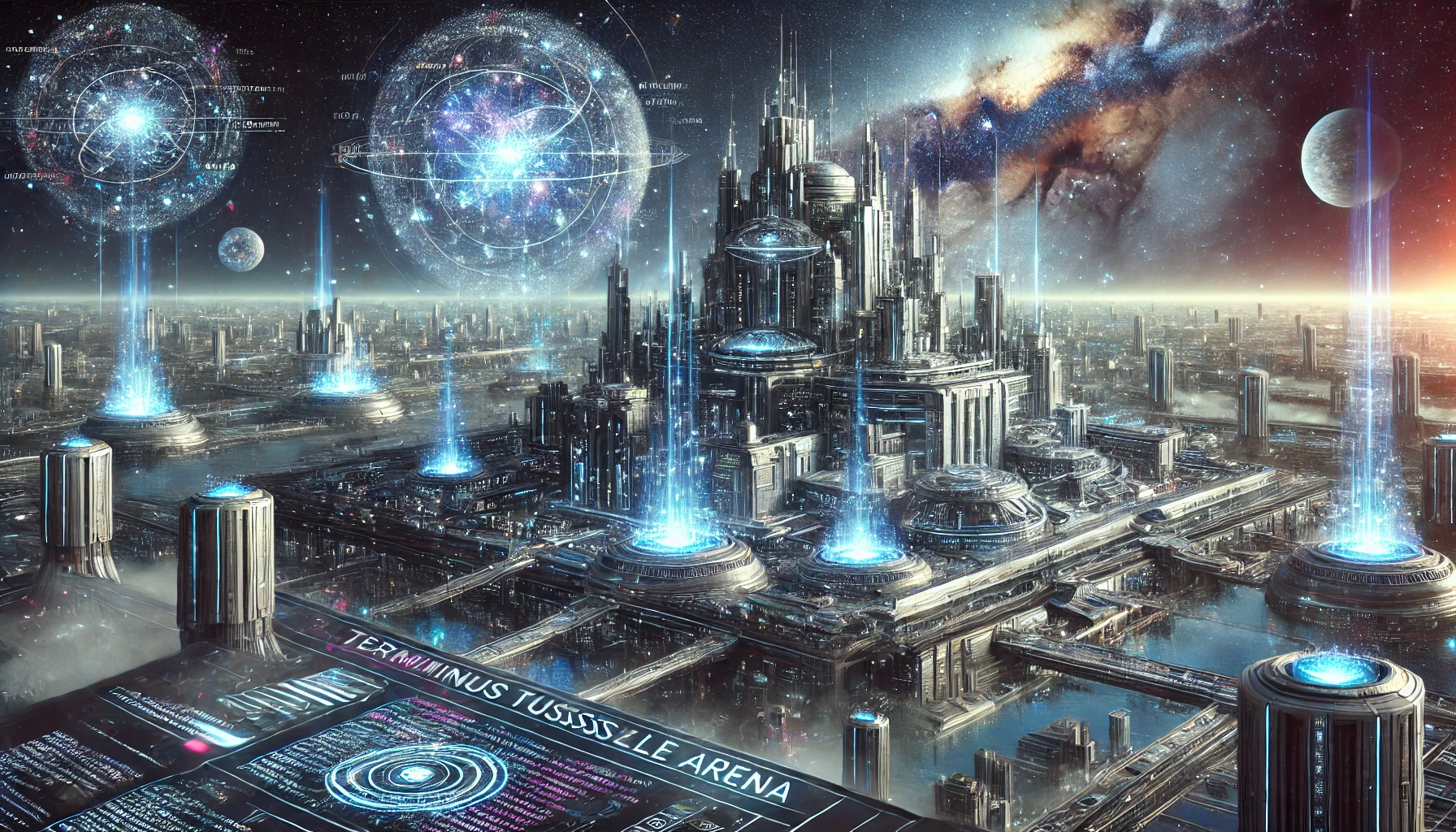
Embark on epic programming battles inspired by the strategic genius of Asimov's Foundation. Showcase your skills, conquer challenges, and ascend to glory in our competitive coding arena.
Check Latest Tussles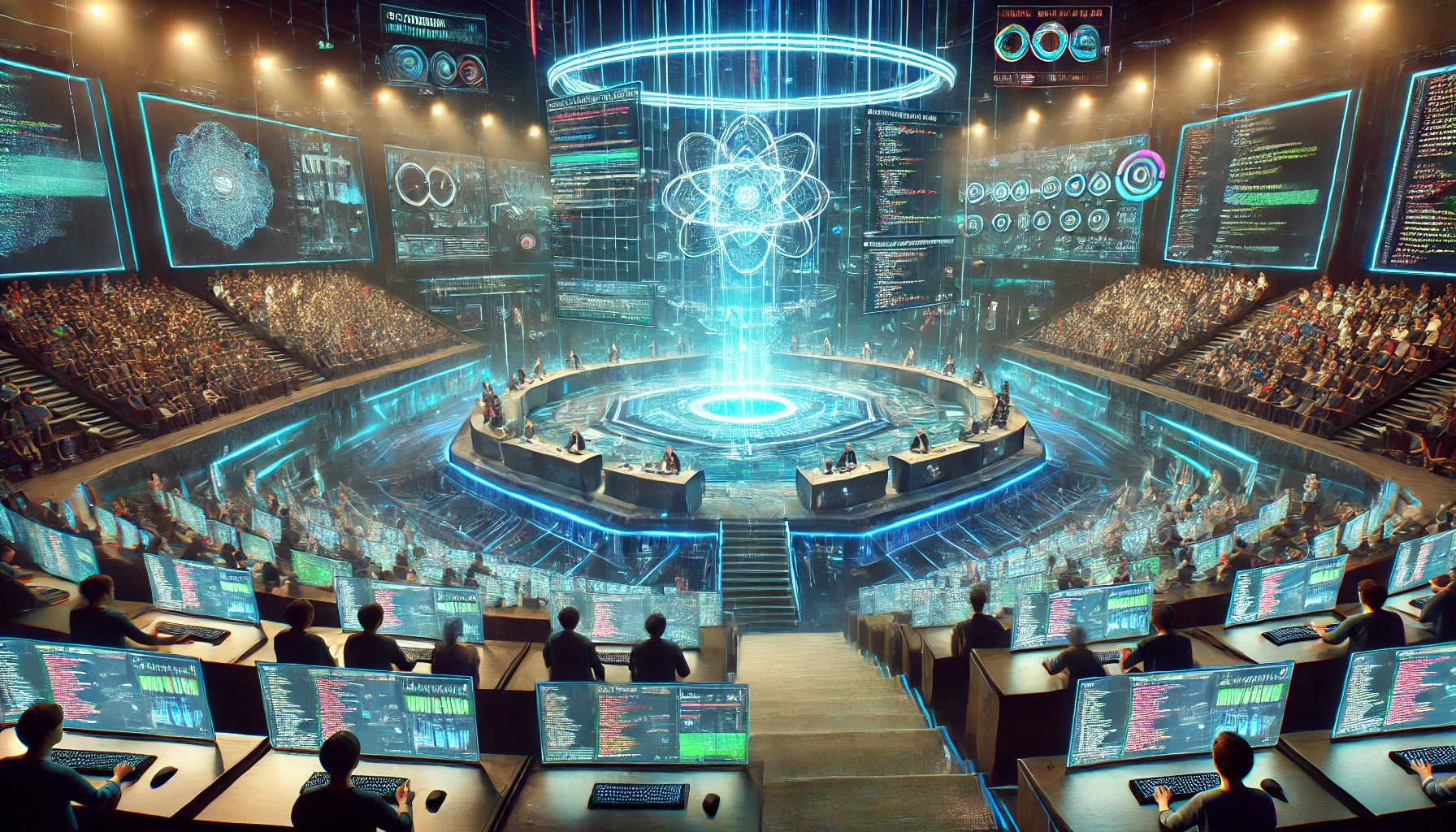
Inspired by Isaac Asimov's Foundation series, Terminus stands as a beacon of knowledge and innovation at the galaxy's edge. Just as the Foundation strategizes to preserve civilization, our arena fosters a community of warrior coders who engage in friendly battles of skill and intellect.
Terminus Tussle Arena is where strategy meets code, and where every tussle is a step towards mastering the art of programming. Whether you're a novice or a seasoned developer, join us to test your prowess and climb the ranks in our ever-evolving challenges.
A beginner-friendly contest. Simple problems using input/output, variables, conditionals, loops, and functions — designed so everyone leaves with at least one accepted solution.
Start Time: September 21, 2026
End Time: September 21, 2030
Chapter 3, Computation: expressions and named constants, if and switch, while and for, your own functions, and vector. Five problems, in order. Each one is judged by running your program against hidden test cases, and you can see why a case failed as soon as you submit -- the input it was given, what it printed, and what was expected. Read that before changing anything. Two of the problems have a case that is deliberately awkward: dividing by zero, and a sequence with no numbers in it. A program that only handles the tidy input will pass most cases and fail those.
Start Time: September 24, 2026
End Time: September 21, 2030
Start here if you have not had a program marked by a judge before. Six problems. None of them needs an idea you have not met -- a loop, an if, a vector, a string. What each one does need is that your program reads exactly what it is given and prints exactly what is asked for: no prompts, no extra words, a newline at the end of every line. Feedback is on. When a case fails you are shown the input it was given, what your program printed, and what was expected. Read those three things side by side before you change any code -- most of the time the difference is one word or one line of output, not the algorithm. Each problem has one idea that the test cases are built to check, and the statement tells you what it is. Solve the example by hand first; if your reasoning and the example disagree, it is the reasoning.
Start Time: October 1, 2026
End Time: September 21, 2030
Ten entry-level problems on functions. The first five ask you to write an ordinary function and call it from `main`; the last five ask for recursion, with no loop at all. Ten points each. Two of them -- the factorial and the sum to n -- you have already solved with a loop in an earlier tussle. Doing them again the other way is the point: a recursive function is a base case and the same question one step smaller, and those two are the same four lines with one operator changed. Leave the last one until you have done the others. Nothing checks whether you really recursed -- the judge only reads your output -- so these are practice rather than a test of obedience.
Start Time: October 13, 2026
End Time: November 27, 2026
Ten short problems on the loops and conditionals from chapters 2 and 3: `for`, `while`, `if` / `else if`, and `switch`. Each is one line of input and one line of output, worth 10 points. Read the statement carefully: several of them turn on a detail that is easy to get wrong rather than on anything long -- what a product should start at, what `%` does to a negative number, where a `break` belongs.
Start Time: October 13, 2026
End Time: November 16, 2026
Ten short problems on `std::vector` and `std::string`, using the loops and the `if` / `else` you already have: five on vectors of numbers, four on strings, and one on a vector of strings. Ten points each. These are meant to be small. What they drill is the handful of things that go wrong the first time you use a vector or a string: that `n` values need a loop rather than `n` variables, that the last index is `size() - 1` and not `size()`, that `'a'` and `"a"` are different types, and that comparing two words is not comparing their lengths.
Start Time: October 13, 2026
End Time: November 23, 2026
| Rank | Warrior | Number of Tussles | Score |
|---|---|---|---|
| 0 | claire | 2960.0 | |
| 0 | makayla | 2943.3333333333335 | |
| 0 | patrick | 2890.0 | |
| 0 | walter_patrick | 2110.0 | |
| 0 | anthony | 1500.0 | |
| 0 | Gary | 1220.0 | |
| 0 | fraserv | 1190.0 | |
| 0 | caleb_roman | 798.0 | |
| 0 | grierc | 793.3333333333334 | |
| 0 | constantine | 720.0 | |
| 0 | shaan | 710.0 | |
| 0 | mario | 440.0 | |
| 0 | aminaa | 400.0 | |
| 0 | grant | 372.0 | |
| 0 | gregorio | 300.0 | |
| 0 | mofeoluwa | 220.0 | |
| 0 | gregorio4 | 200.0 | |
| 0 | conor | 40.0 | |
| 0 | darira | 30.0 | |
| 0 | wilfrid | 0.0 | |
| 0 | bailey | 0.0 | |
| 0 | titilope | 0.0 | |
| 0 | mohammedalijinnah | 0.0 | |
| 0 | mofe | 0.0 | |
| 0 | grace | 0.0 | |
| 0 | anthony8 | 0.0 | |
| 0 | admin | 0.0 |
Track your progress and see how you're advancing in the Terminus Tussle Arena. Each tussle you conquer brings you closer to becoming a legendary warrior coder.
We extend our deepest gratitude to our community of warrior coders. Your passion, dedication, and continuous support drive the evolution of the Terminus Tussle Arena. Together, we forge a future where knowledge and innovation thrive.
Dr. Gregorio Toscano
Founder, Terminus Tussle Arena